The headlines around Iran feel heavy right now. When you turn on the news, it sounds serious. Escalating conflict, rising tension, markets reacting. It creates that uncomfortable sense that something bigger might be unfolding. And if you are approaching or living in retirement, that feeling carries more weight. This is not just news. It feels like it could impact your financial security.
That reaction is completely understandable. Geopolitical events can move markets in the short term because they introduce uncertainty, and uncertainty is something markets do not like. The reality is we do not know how this situation will unfold. No one does. That lack of clarity is often what makes these moments feel the most unsettling.
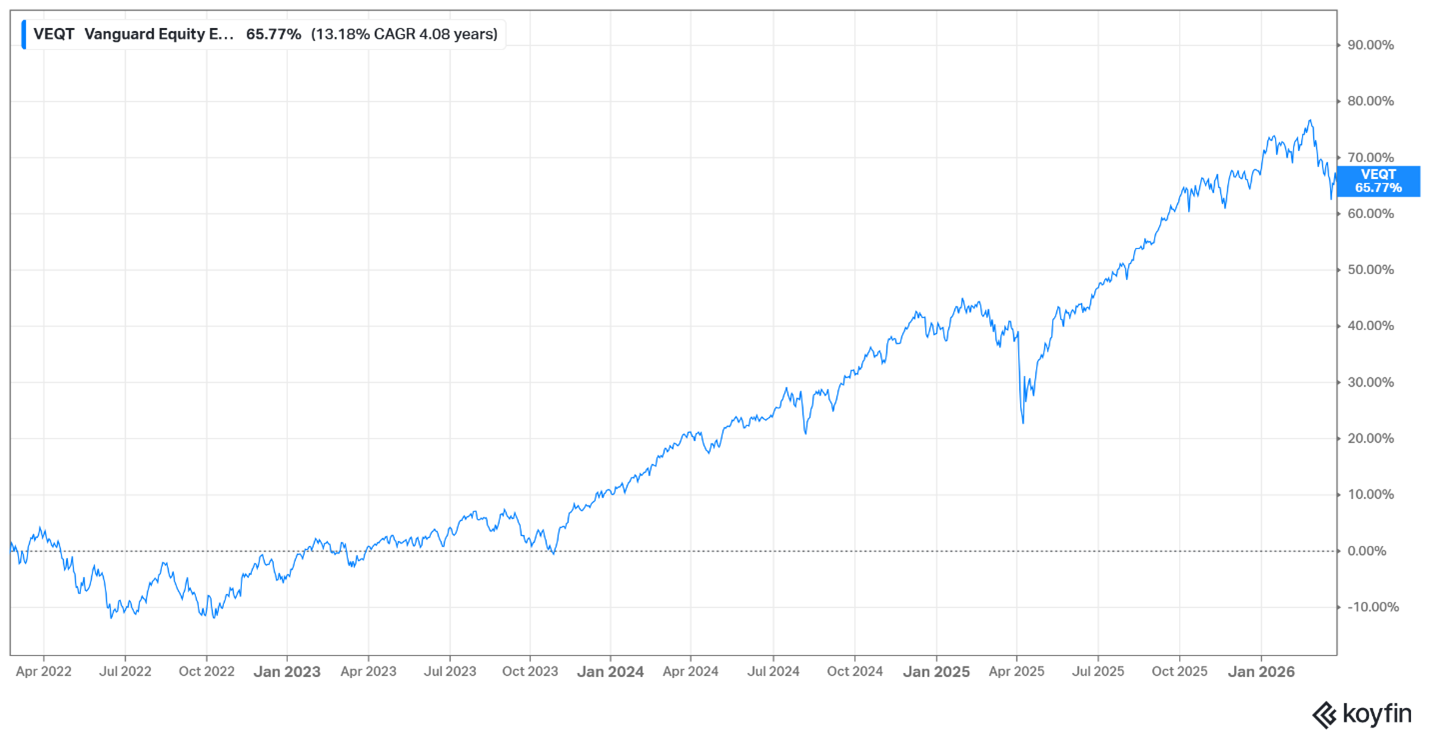
But we have been here before. Think back to early 2022 when Russia invaded Ukraine. At the time, it felt like a major turning point. Markets dropped quickly, news coverage was constant, and there were real concerns about how far the conflict could spread and what it would mean for the global economy.
In the moment, it was hard to see past the uncertainty. But over time, something important happened. Markets adjusted.
That is not because the risks disappeared. It is because markets process bad news quickly. Prices adjust to reflect uncertainty and expectations get reset. From there, businesses continue doing what they have always done. They adapt, they operate, and they find ways to grow. Over time, it is those underlying fundamentals that drive returns, not the headlines we are reacting to in the moment.
Global Market Performance Since the Russia–Ukraine Invasion
Here’s how a global stock portfolio has performed since the day Russia invaded Ukraine:
U.S. Stock Market Returns Following Other Geopolitical Conflicts
| Event | 1 Year S&P 500 Return | 3 Year S&P 500 Return | 5 Year S&P 500 Return |
|---|---|---|---|
| Cuban Missile Crisis | 34.25% | 78.26% | 99.05% |
| Iran Hostage Crisis | 37.68% | 55.91% | 105.28% |
| Gulf War | 21.86% | 50.73% | 95.90% |
| Kosovo War | 23.52% | 32.50% | -12.42% |
| 9/11 | -15.65% | 12.38% | 37.23% |
| Iraq War | 34.95% | 60.76% | 69.75% |
| Crimean War | 16.83% | 36.30% | 67.42% |
This is one of the hardest parts of investing to internalize. When you are living through a major event, it feels permanent. It feels like something has changed for good. But markets are forward looking. They do not wait for things to feel comfortable again. They begin recovering while uncertainty is still present, often when the news still feels negative.
That is where many investors run into trouble. The real risk is not the event itself, but how we respond to it. Selling in moments of fear, waiting for clarity before getting back in, or trying to avoid short-term losses. These decisions feel reasonable at the time, but they often come at the cost of missing the recovery that follows. And that recovery rarely comes with a clear signal.
Bringing this back to today, the situation with Iran may continue to evolve. Markets may remain volatile in the near term, and there may be more unsettling headlines. That is part of investing in a global economy. But this type of uncertainty is not new. We have seen it before, and markets have worked through it before.
This may feel like a moment that requires action. In most cases, it is a moment that requires perspective. And that is often the difference between reacting and staying on track.